Have you ever paused to think about the incredible tapestry of human existence, stretching back millennia, often in harmony with the wild earth? I know I have, and lately, my mind has been completely engrossed by the fascinating history and unique lifestyles of indigenous forest communities, often broadly referred to as Pygmy tribes.
It’s truly astounding to consider how these resilient groups have thrived for centuries, maintaining a deep connection to their ancestral lands and traditions in ways that feel almost otherworldly in our hyper-digital age.
I’ve personally found myself poring over countless stories and studies, gaining a profound appreciation for their intricate knowledge of nature and their profound spiritual connection to the forest.
It truly puts into perspective how much we, in our bustling urban landscapes, might have lost along the way. Yet, these ancient ways of life are facing unprecedented challenges today, from deforestation and climate change impacting their very homes, to the pressures of globalization eroding their distinct cultures.
This isn’t just history; it’s a living, breathing story that continues to unfold right now, impacting all of us as we collectively navigate a changing planet.
It makes you wonder what vital wisdom we stand to lose if we don’t pay attention, doesn’t it? Join me as we embark on a journey to truly understand their compelling world.
Let’s delve deep into their profound history and vibrant daily lives, and discover the powerful lessons they hold for our future.
Ancient Roots, Enduring Spirits: Unraveling Their Timeless Past
It’s easy to get swept up in our fast-paced modern world, isn’t it? But sometimes, I find myself yearning for a deeper connection to history, a sense of roots that stretch back further than any recent trend.
That’s precisely why the indigenous forest communities, often broadly known as Pygmy peoples, have captivated my imagination. Their origins are shrouded in the ancient mists of time, representing one of humanity’s most enduring connections to the wild heart of our planet.
When you delve into their history, you’re not just reading facts; you’re touching a living legacy. These groups, found predominantly across Central Africa, are considered among the oldest inhabitants of the region, their lineage potentially diverging from other human populations as far back as 130,000 years ago, and certainly over 60,000 years ago.
It’s truly humbling to think about that kind of generational continuity.
A Deep Dive into Early Ancestry
Genetic studies have painted a picture of incredible divergence and ancient roots for African Pygmy populations, suggesting a distinct lineage that predates many others.
Imagine, if you can, the vast stretches of time where these resilient hunter-gatherers roamed the dense rainforests of Central Africa, developing intricate knowledge of their environment.
For most of the past 50,000 years, Western Pygmy groups may have existed as a single, interconnected population, sharing kinship and moving across vast forest territories.
Their presence shaped the very landscape, not in a destructive way, but in a symbiotic relationship that allowed both nature and humanity to flourish.
I mean, we’re talking about a kind of harmony that’s almost unfathomable today.
Cultural Endurance Amidst Change
Over millennia, these communities have faced waves of migration from agricultural peoples, including those speaking Central Sudanic, Ubangian, and Bantu languages.
While many indigenous groups eventually adopted the languages of their neighbors, elements of their original tongues persist, a testament to their cultural resilience.
The term “Pygmy,” while sometimes viewed as a broad and potentially derogatory label, has historically been applied due to their distinctively shorter stature.
However, it’s crucial to remember that this term encompasses a rich tapestry of diverse ethnic groups, each with its own unique identity, like the Aka, Baka, Mbuti, and Twa, who prefer to be known by their specific group names.
When I learn about these distinct identities, it really drives home that we’re talking about vibrant, living cultures, not just a historical footnote.
Their journey through time is a powerful reminder of humanity’s adaptive spirit and the enduring strength of cultural heritage against the backdrop of an ever-changing world.
Forest as Home: Daily Rhythms and Resourcefulness
Spending even a little time imagining life within the deep forest, far from grocery stores and paved roads, really makes you appreciate the incredible resourcefulness of indigenous forest communities.
I’ve often daydreamed about what it would be like to truly live off the land, guided by the rhythms of nature, and their daily lives are a masterclass in exactly that.
For these groups, the forest isn’t just a place they inhabit; it’s their supermarket, their pharmacy, their shelter, and their playground. Their semi-nomadic lifestyle, persisting largely unchanged for thousands of years, is built on a profound understanding of their environment, relying primarily on hunting, fishing, and gathering wild fruits and nuts.
A Symphony of Survival: Hunting and Gathering
The men typically take on hunter-gatherer roles, venturing into the forest with immense skill and knowledge. They might use traditional tools like bows and arrows, nets, or even wire traps, often collaborating with neighboring Bantu communities, sometimes sharing a portion of their valuable bushmeat in exchange for other goods.
I can only imagine the patience and precision required for such endeavors! Women, meanwhile, are crucial to running the household, gathering a vast array of plant foods, caring for children, and preparing meals.
They possess an encyclopedic knowledge of forest flora, knowing which plants provide sustenance, medicine, or materials for daily life. It’s truly a community effort, with everyone contributing their unique skills to ensure the well-being of the group.
Children even join in, catching crabs and freshwater prawns.
Shelter and Community: Weaving Life into the Woods
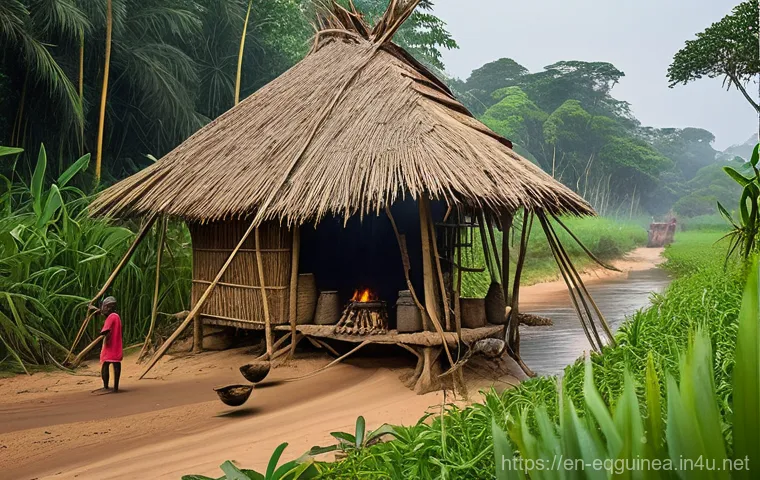
Their homes are often communal structures, skillfully crafted from wood, bamboo, and leaves, designed to be practical for their mobile lifestyle. Imagine a round hut, sometimes large enough to accommodate dozens of people, with each family having its own fire and hammocks strung around it.
The center space often serves as a communal area for feasts and discussions, highlighting the strong sense of community that underpins their existence.
Decisions are typically made communally, with everyone having a voice, which is a powerful lesson in collective governance, if you ask me. This isn’t just about survival; it’s about a deep, interconnected way of living that respects both the individual and the collective.
I personally think we could all learn a thing or two from their approach to community and resource management.
| Aspect of Daily Life | Traditional Practices | Modern Adaptations (where applicable) |
|---|---|---|
| Food Source | Hunting (bushmeat), fishing (rivers/streams), gathering (fruits, nuts, honey, plants) | Trade with farmers for cultivated foods (e.g., cassava, corn, plantains), some limited cultivation |
| Shelter | Communal huts made from wood, bamboo, leaves | Semi-sedentarization in roadside villages due to external pressures |
| Tools & Technology | Bows, arrows, nets, traps for hunting and fishing | Some use of metal tools, Western-style clothing |
| Community & Governance | Band-sized groups, communal decision-making | Continued strong community bonds, but facing external political pressures |
Whispers of the Wild: Spirituality and Cultural Riches
Beyond the practicalities of daily survival, what truly moves me about these forest communities is the profound depth of their spiritual and cultural lives.
It’s not just about living *in* the forest; it’s about being *of* the forest, with every rustling leaf and every creature holding a story, a spirit, a sacred connection.
I’ve often thought about how we, in our concrete jungles, miss out on this kind of immersive, spiritual experience, and learning about their world truly brings that home.
Their beliefs are intricately woven into the fabric of the forest itself, seeing it not merely as a resource, but as a living, breathing entity, imbued with spirits and energies.
Connecting with the Cosmos: Sacred Spaces and Rituals
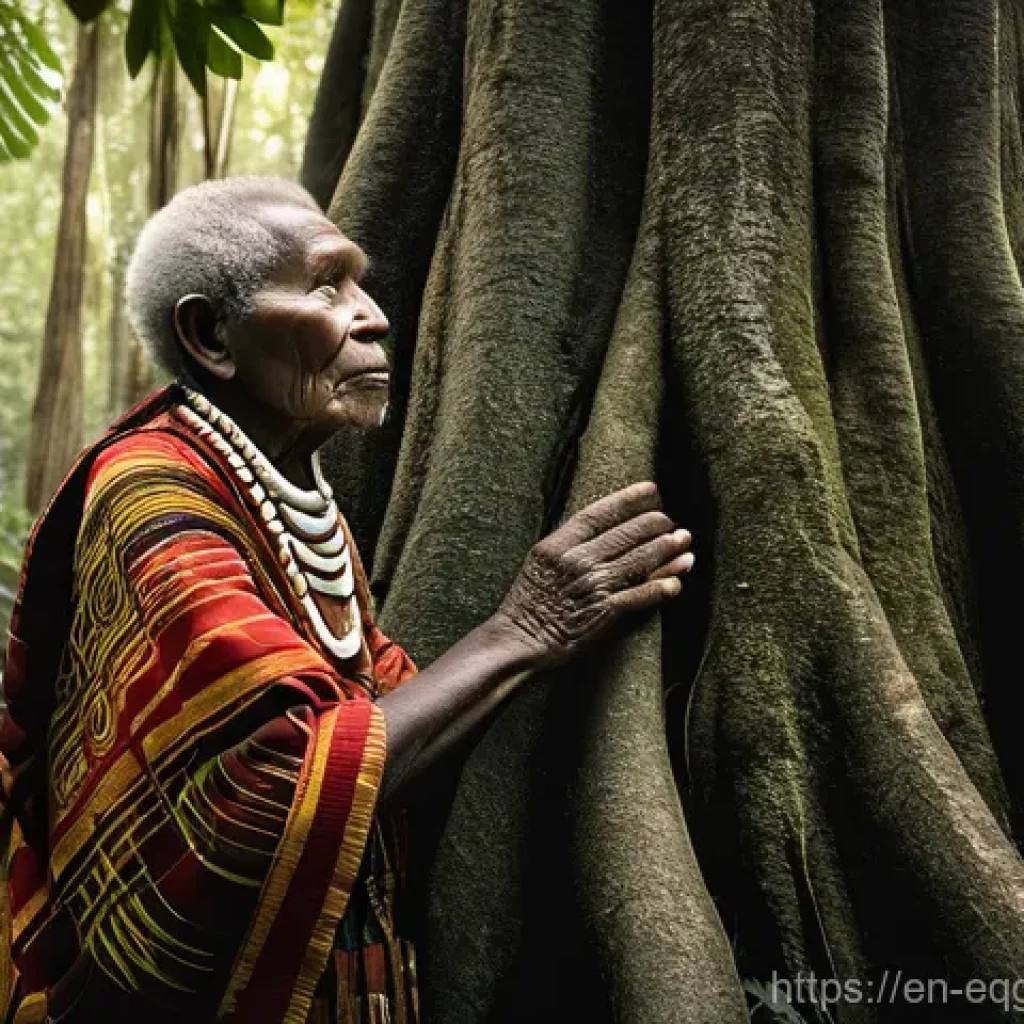
For many indigenous groups, specific groves, ancient trees, or unique natural formations within the forest are considered deeply sacred. These aren’t just pretty spots; they are seen as portals to the divine, dwelling places of powerful spirits, and sites for vital rituals, ceremonies, and offerings.
Imagine participating in a ceremony where you’re not just praying, but actively connecting with your ancestors and seeking guidance from the spirit world right there, surrounded by the towering trees!
This perspective challenges our often-anthropocentric view of nature, highlighting a worldview where the forest is a living library, a spiritual guide, and a critical element in maintaining cosmic balance.
The very health and vitality of certain trees are often directly linked to the spiritual and physical well-being of the community.
A Tapestry of Tradition: Songs, Dances, and Identity
Culture among these groups is rich and vibrant, expressed through unique traditions, including songs, folk dances, and oral histories that pass down generations of wisdom and connection to the land.
These practices reinforce a holistic and reciprocal relationship with the Earth, where sustainability isn’t a concept but a cultural and spiritual way of life.
Respect for animals, for instance, means viewing them as spiritual beings, deserving of profound respect and gratitude, with hunting rituals often involving prayers and offerings to honor the animal’s spirit.
Their stories and traditions are deeply rooted in specific forest landscapes, holding the memories of ancestors and the sites of creation myths. This profound connection means that disconnection from their ancestral forests is a heartbreaking loss, impacting not just their livelihoods but their very cultural continuity and spiritual well-being.
It makes me realize how much we take for granted.
Guardians of the Green: Their Profound Ecological Wisdom
One of the most eye-opening aspects of studying indigenous forest communities is realizing just how much we, in our technologically advanced societies, could learn from their ecological wisdom.
They aren’t just living *in* the forest; they are actively managing it, often far more effectively and sustainably than modern conservation efforts. I’ve been so impressed by how their traditional knowledge isn’t just a quaint custom, but a sophisticated system of resource management that has ensured the health of the forest for millennia.
A Living Library of the Land
Over centuries, these communities have developed an intimate, interdependent knowledge of the flora and fauna around them. They possess an unrivaled understanding of medicinal plants, the behavior of animals, and the intricate balance of the ecosystem.
This isn’t just academic; it’s practical, passed down through generations of observation and interaction. For example, some groups utilize rotational harvesting and controlled burns to maintain forest health and biodiversity, techniques that modern forestry is only now beginning to fully appreciate.
Ecologists like Charles M. Peters, who has worked with indigenous forest communities for decades, highlights that many tracts of forest around the world that have been intensively managed by local people for generations are precisely why they remain forests today.
It makes me wonder, if we just listened more, how much better off our planet would be.
Stewardship Through Sacred Practice
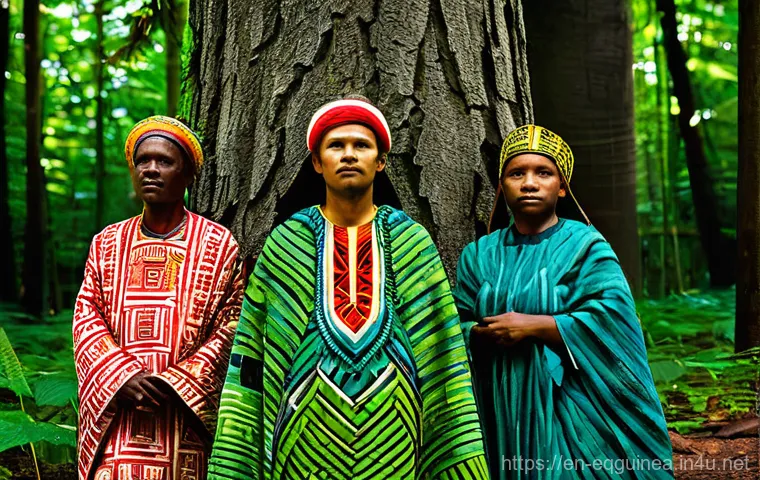
Their ecological practices are often deeply intertwined with their spiritual beliefs. The idea that certain areas or species are sacred acts as a powerful, built-in conservation mechanism.
For instance, research in places like Guyana suggests that indigenous cultural beliefs, including shamanism and avoidance of spiritually significant sites, help preserve tropical forests and wildlife by inadvertently creating animal refuges.
I mean, how incredible is that? Their respect for nature isn’t just a philosophy; it’s a practical guide for sustainable living that has quantifiable, positive impacts on biodiversity.
This holistic view, where the ecological and the spiritual are inseparable, provides crucial lessons for broader sustainability efforts, urging us to move beyond exploitation towards a model of respectful stewardship.
They are, quite simply, the world’s best forest guardians, with studies showing significantly lower deforestation rates on tenured Indigenous forestlands compared to outside these areas.
Navigating the Modern Current: Challenges and Resilience
It breaks my heart to see how these ancient ways of life, so rich in wisdom and harmony, are facing unprecedented threats in our modern world. It’s a sobering reminder that our collective actions have far-reaching consequences, impacting communities far removed from our daily lives.
I’ve often wondered about the real-world impact of issues like deforestation, and when you look at these indigenous forest communities, you see it laid bare.
Under Pressure: Deforestation and Displacement
The most pressing challenge is undoubtedly the rampant deforestation and habitat destruction. Forests, which are their ancestral homes and the very source of their existence, are being cleared at an alarming rate for logging, agriculture, mining, and other industrial activities.
This isn’t just an environmental issue; it’s a human rights crisis. When trees are cut down, these communities lose their homes, their traditional food sources, medicinal plants, and hunting grounds.
It disrupts their self-sufficient economies and forces them to relocate, often leading to a profound loss of cultural identity and traditional knowledge.
Imagine being forced to leave a place that holds generations of your family’s history, stories, and spiritual connections. It’s truly devastating.
The Erosion of Culture and Rights
Beyond the physical loss of land, these communities grapple with the pressures of globalization, assimilation, and discrimination. Many lack formal recognition of their land rights, leaving them vulnerable to exploitation and further displacement.
There’s a sad irony in how their intimate knowledge of the forest, once a source of strength, can sometimes be overlooked or undervalued by external parties.
The lure of urban life, though often challenging, also draws younger generations away, further eroding traditional practices and languages. I’ve found it incredibly disheartening to read about how their sacred sites are desecrated by industrial activity, or how their food systems go into recession as vital resources disappear.
Despite these immense challenges, many indigenous groups are demonstrating incredible resilience, actively fighting for their rights and partnering with organizations to protect their lands and cultures.
They are truly on the front lines, reminding us that protecting their world is protecting a vital part of our shared human heritage.
A Call to Connect: What Their World Teaches Us Today
As I reflect on the incredible journey into the world of indigenous forest communities, I can’t help but feel a profound sense of urgency and hope. It’s clear that their stories aren’t just about a distant past or remote cultures; they hold vital lessons for all of us, living in our interconnected, rapidly changing world.
I personally believe that if we truly listen, their ancient wisdom can illuminate a path forward, not just for them, but for the entire planet.
Relearning Our Place in the Ecosystem
Perhaps the most powerful lesson they offer is a fundamental rethinking of our relationship with nature. We’ve grown accustomed to viewing the Earth as a resource to be exploited, something separate from us.
But these communities show us a worldview where humanity is an integral, interdependent part of the ecosystem, not its master. They teach us about reciprocity, giving back to the forest in exchange for its gifts, and understanding that the health of the forest is directly linked to the well-being of the community, both physically and spiritually.
This concept of “spiritual ecology,” where all living beings are equally important in a circle, not a hierarchy, is something I think we desperately need to re-learn.
It challenges us to move from domination to partnership, from exploitation to stewardship, and towards a more ecocentric worldview.
Guardians of Global Biodiversity and Climate Solutions
It’s not an exaggeration to say that indigenous peoples are among the world’s most effective conservationists. They manage a significant portion of the Earth’s lands, often territories rich in biodiversity, and play a crucial role in mitigating climate change by protecting vast carbon sinks.
Their ancestral knowledge, honed over millennia, offers invaluable insights into sustainable resource management and adaptation to environmental shifts.
Imagine the power of combining their time-tested practices with modern science! Organizations are increasingly recognizing this, partnering with indigenous groups to leverage their expertise in conservation efforts.
I’ve found it inspiring to see how some groups are using modern technology, like GPS mapping, to secure their land rights and protect their territories from illegal activities.
This collaboration isn’t just about preserving their cultures; it’s about safeguarding global biodiversity and our collective future.
Inspiring Resilience and Advocacy
Finally, their enduring resilience in the face of immense challenges is a profound source of inspiration. Despite facing threats from deforestation, climate change, and discrimination, many communities continue to fight fiercely for their rights, their lands, and their cultural survival.
They advocate for their self-determination and remind us that cultural diversity is just as vital as biological diversity. By paying attention to their struggles and amplifying their voices, we can all contribute to a more just and sustainable world.
Their stories are a powerful call to action, urging us to connect with our shared humanity and to work towards a future where all communities, and the planet itself, can thrive.
Concluding Thoughts
Whew, what a journey we’ve taken together, diving deep into the incredible world of indigenous forest communities! Honestly, spending time reflecting on their ancient roots, profound ecological wisdom, and vibrant cultural spirits truly puts things into perspective for me. It’s not just about learning history; it’s about connecting with a living legacy that offers invaluable lessons for how we, too, can live more harmoniously with our planet. I truly hope this post has sparked a sense of wonder and perhaps even a renewed appreciation for the diverse ways humanity connects with the Earth. Let’s carry their stories and wisdom forward.
Useful Information to Know
1.
Support Indigenous-Led Conservation: When considering how to help, seek out and support organizations that are directly led by indigenous communities or partner ethically with them. These groups are often the most effective guardians of their lands and cultures, and their work is crucial for global biodiversity and climate health. Look for transparency and direct engagement with the communities they aim to serve.
2.
Educate Yourself Further: The world of indigenous forest communities is incredibly diverse. Don’t stop here! Explore documentaries, books, and reputable online resources from anthropologists, ethnobotanists, and indigenous voices themselves. Learning about specific groups like the Mbuti, Baka, or Aka, will deepen your understanding beyond broad generalizations.
3.
Recognize Land Rights as Human Rights: A core takeaway is that securing indigenous land rights is paramount. When these communities have legal tenure over their ancestral territories, it leads to significantly lower deforestation rates and better conservation outcomes. Advocating for land rights isn’t just about justice; it’s a powerful climate solution.
4.
Beware of Stereotypes: It’s easy for complex cultures to be oversimplified. Remember that “Pygmy” is a broad term encompassing many distinct groups. Avoid romanticizing or exoticizing their ways of life, and instead, appreciate their resilience, adaptability, and the deep, practical knowledge they hold about their environments. They are not relics of the past but living, evolving cultures.
5.
Connect with Nature in Your Own Way: While most of us can’t live a traditional forest-dwelling life, we can still learn from their profound connection to nature. Take time to observe your local environment, understand its ecosystems, and consider how your actions impact the natural world around you. Even small steps towards a more reciprocal relationship with nature can make a difference.
Key Takeaways
Reflecting on these incredible communities, a few things really stand out to me as paramount. First, their ancient wisdom isn’t just historical trivia; it’s a vital playbook for sustainable living that is profoundly relevant to our modern world. They embody a genuine interconnectedness with nature, viewing themselves as an integral part of the ecosystem, rather than separate from it. This reciprocal relationship ensures that they are not just inhabitants, but active guardians of biodiversity, playing an absolutely critical role in maintaining the health of our planet. When you consider that they manage vast, ecologically rich territories, their contributions to global environmental stability are simply undeniable. However, they face immense pressures from deforestation and the erosion of their rights, making it more crucial than ever for us to recognize their value and support their ongoing resilience and advocacy. Ultimately, their stories are a powerful reminder that protecting these unique cultures is inseparable from protecting our shared future.
Frequently Asked Questions (FAQ) 📖
Q: Where in the world can we find these fascinating indigenous forest communities, often referred to as Pygmy tribes, and what makes their traditional way of life so unique?
A: It’s a fantastic question, and one I’ve spent countless hours pondering! When we talk about indigenous forest communities, and especially those often called “Pygmy tribes,” we’re really looking at incredibly diverse groups primarily concentrated in the dense rainforests of Central Africa.
Think places like the Congo Basin, encompassing countries such as the Democratic Republic of Congo, Cameroon, Gabon, and the Central African Republic, among others.
There are also distinct groups found in parts of Southeast Asia and even South America, though the term “Pygmy” most commonly refers to the African communities who are characterized by their notably short stature, typically averaging less than 150 cm (4 ft 11 in) for adult men.
What truly sets their traditional way of life apart, in my experience, is their profound, almost spiritual connection to the forest itself. For generations, these communities have thrived as expert hunter-gatherers, moving with the seasons and taking only what they need, living in remarkable harmony with their environment.
Their daily lives are an intricate dance with nature; men traditionally hunt using bows, arrows, and traps, while women gather fruits, roots, and medicinal plants.
It’s a stark contrast to our modern consumer-driven world, and it really makes you think about sustainability. I’ve read so many accounts where their respect for the forest is paramount – they view it as their god and any harm to its life is considered deeply disrespectful.
This isn’t just about survival; it’s a holistic worldview where every element of their existence, from their music and dance to their rich oral storytelling traditions, is interwoven with the rhythm of the forest.
They’ve perfected polyphonic vocalization, a complex musical style, used for everything from celebrating a successful hunt to marking new settlements.
Honestly, every time I delve into their traditions, I feel a renewed sense of awe for how they’ve maintained such a deep cultural heritage despite external pressures.
Q: What significant challenges are these ancient forest communities facing in today’s rapidly changing world, and what are the real-world consequences of these struggles?
A: Oh, this is where my heart truly aches, because these vibrant communities, with their invaluable wisdom, are up against enormous odds. From what I’ve seen and researched, the challenges they face are multifaceted and deeply interconnected.
First and foremost, deforestation is a relentless enemy. Their ancestral forests, which are literally their homes, their supermarkets, and their pharmacies, are being cleared at an alarming rate for logging, industrial agriculture, and mining.
This isn’t just about losing trees; it’s about the complete disruption of their entire way of life. When the forest goes, their traditional food sources vanish, their access to medicinal plants is cut off, and their self-sufficient economies are shattered, often forcing them into poverty and dependence.
Beyond deforestation, climate change is a massive threat. These communities often inhabit ecologically sensitive areas, making them incredibly vulnerable to extreme weather events, unpredictable seasons, and shifting ecosystems.
I remember reading a story about how changing rainfall patterns made hunting incredibly difficult for one group, impacting their food security dramatically.
Then there’s the intense pressure of globalization and land grabbing. Even when indigenous communities have legal rights to their lands, those rights are often not enforced, leaving them vulnerable to illegal intruders and exploitation.
Tragically, many indigenous environmental defenders face intimidation, criminalization, and even violence for simply trying to protect their homes. It’s a heartbreaking reality, leading to the erosion of traditional governance, cultural practices, and even mental health struggles within communities.
It’s a stark reminder that their fight for survival is directly linked to the health of our planet, and their struggles are a testament to what we stand to lose if we don’t act.
Q: What profound lessons can we, in our modern, often disconnected lives, learn from the wisdom and resilience of these indigenous forest communities?
A: This is probably the most powerful question of all, because honestly, I believe these communities hold keys to a more sustainable and fulfilling future for all of us.
Having immersed myself in their stories, I’ve come to realize that their wisdom isn’t just ancient; it’s incredibly relevant right now. The most profound lesson, I think, is their unwavering commitment to sustainability and reciprocity with nature.
Unlike our often extractive relationship with the environment, these communities live by taking only what they need and ensuring the forest can replenish itself.
It’s a lesson in true stewardship, seeing nature not as a resource to be exploited, but as a living entity to be respected and protected. I’ve personally tried to incorporate more mindful consumption into my life after learning about their practices, and it truly makes a difference.
Another huge takeaway is the strength of community and interconnectedness. In many of these societies, individual well-being is deeply intertwined with the well-being of the group and the environment.
Decision-making often involves collective wisdom, and tasks are shared, fostering a strong sense of belonging and mutual support. This really makes you reflect on our increasingly individualized societies and the importance of strong social bonds.
They also teach us about resilience and adaptability. Despite facing immense external pressures and profound changes to their environments, many communities continue to find ways to preserve their cultures and fight for their rights.
Their ability to adapt while maintaining core values is truly inspiring. Ultimately, they offer us a powerful blueprint for living in harmony with the planet, reminding us that there are other, perhaps better, ways to exist than the path our modern world has largely taken.
It’s a call to listen, to learn, and to truly appreciate the invaluable wisdom that resides in these ancient ways of life.